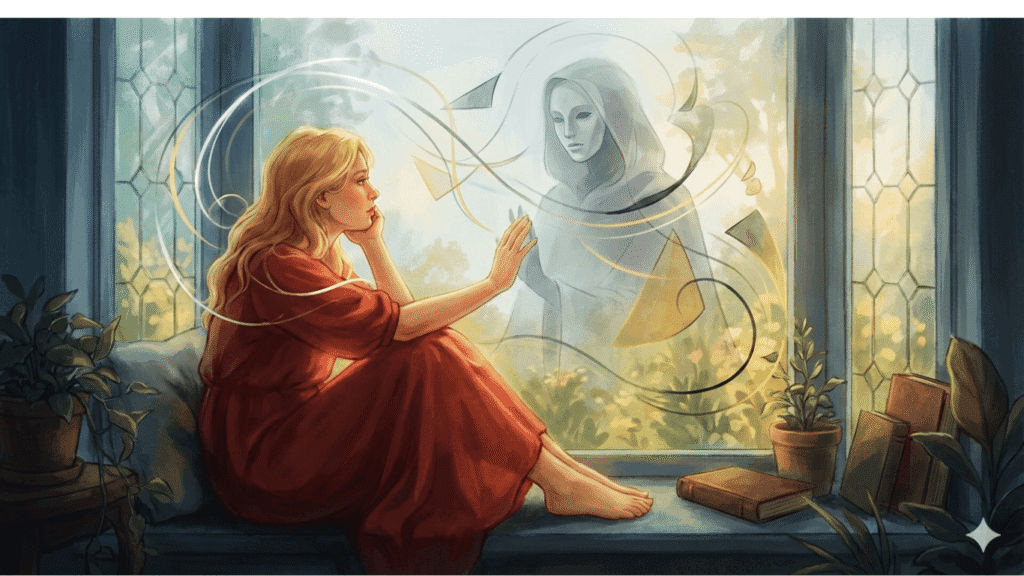
Have you ever walked away from a conversation feeling strangely hollow—like reality just slipped through your fingers—and then blamed yourself for it? That slow, quiet unraveling has a name: gaslighting. It doesn’t scream. It whispers. It convinces thoughtful, self-aware people that doubt is humility and confusion is growth. In a world obsessed with “working on yourself,” gaslighting often hides in plain sight, teaching you to mistrust your instincts while calling it love, logic, or spiritual maturity.

Introduction: When Doubt Isn’t Humility—It’s a Red Flag

At some point, many of us have stood in front of our own reflection and thought, “Maybe I’m overreacting. Maybe I’m too sensitive. Maybe I imagined it.”

That quiet erosion of self-trust doesn’t usually arrive with drama. It slips in gently. Polite. Reasonable. Almost loving. And that’s precisely what makes gaslighting so destabilizing.

In self-love work, this isn’t just a relational issue—it’s a spiritual one. When your perception of reality is repeatedly questioned, your nervous system adapts by shrinking. You stop listening inward. You outsource your truth. Over time, you forget that you ever trusted yourself at all.

Ancient traditions warned us about this long before psychology gave it a name. Yoga, Stoicism, and even early Buddhist texts spoke about avidya—ignorance not as a lack of intelligence, but as disconnection from inner knowing. Modern neuroscience now confirms what sages intuited: chronic self-doubt reshapes the brain.

This article isn’t about diagnosing villains. It’s about remembering who you were before you learned to doubt yourself.

The Subtle Mechanics of Psychological Distortion

Why Confusion Is the Point (Not a Side Effect)

Psychological manipulation rarely looks like control at first. It looks like “concern.” It sounds like logic. It often wears the costume of love.

From a neuroscience perspective, repeated contradiction of lived experience creates cognitive dissonance, activating the anterior cingulate cortex—the brain’s conflict monitor. When this happens too often, the brain seeks relief by defaulting to the loudest external narrative rather than the quieter internal one.

In yogic language, this is the mind (manas) overpowering wisdom (buddhi).

Over time:

  • Memory becomes less accessible
  • Emotional confidence declines
  • The body stays in low-grade fight-or-flight

Confusion isn’t accidental. It’s the environment where self-trust withers.

Ancient Wisdom Saw This Coming

Yoga Sutras, Stoics, and the Art of Inner Authority

In Yoga Sutra 1.7, Patanjali describes pramana—valid knowledge—as arising from direct perception, inference, and reliable testimony. Notice the order: direct perception comes first.

Stoic philosopher Epictetus echoed this centuries later:

“If you want to improve, be content to be thought foolish and stupid.”

In other words, reality begins internally. External voices are secondary.

Gaslighting flips this hierarchy. It teaches you that your direct perception is unreliable, while someone else’s interpretation is law. Ancient wisdom didn’t romanticize self-doubt; it treated it as a sign of misalignment.

Blonde woman in a red dress reflecting on gaslighting, standing in a sunlit room with confidence and poise.

What Neuroscience Reveals About Self-Trust

The Brain on Chronic Invalidation

Studies in affective neuroscience show that long-term emotional invalidation impacts the hippocampus (memory integration) and amygdala (threat detection). When your experiences are consistently denied, the brain recalibrates toward hypervigilance.

You may notice:

  • Overthinking simple decisions
  • Needing reassurance for obvious truths
  • Feeling “foggy” under pressure

Dr. Bessel van der Kolk’s work on trauma confirms this pattern: the body remembers what the mind learns to question. Self-doubt isn’t a personality trait—it’s a physiological adaptation.

Self-Love Isn’t Affirmations—It’s Epistemology

Learning to Trust Your Knowing Again

Self-love, in this context, means reclaiming your role as a reliable narrator of your own life.

Yoga calls this svadhyaya—self-study. Not self-criticism. Not self-improvement. Study.

Start gently:

  • Notice when your body tightens during conversations
  • Track moments when clarity appears after distance
  • Observe who benefits when you doubt yourself

This isn’t paranoia. It’s discernment.

The Spiritual Cost of Losing Your Inner Witness

In Buddhist psychology, the sakshi—the inner witness—observes without distortion. When that witness is overridden long enough, people experience something deeper than confusion: existential shame.

You don’t just think, “I’m wrong.”
You feel, I shouldn’t exist like this.

That’s why healing from gaslighting (yes, that’s the second time—and last) often feels like a spiritual awakening rather than a breakup recovery.

Rebuilding Self-Trust: A Nervous-System Approach

Why Safety Comes Before Insight

You can’t reason your way back into self-trust. The nervous system must feel safe first.

Practices supported by both yoga therapy and neuroscience include:

  • Slow exhalation breathing (stimulates the vagus nerve)
  • Grounding through the senses
  • Journaling events without interpretation

Clarity returns when the body exits survival mode.

Modern Relationships, Ancient Patterns

Technology didn’t invent psychological manipulation—it just sped it up. Ancient texts described these dynamics in families, gurus, and courts. Today, they appear in romantic partnerships, workplaces, and wellness spaces.

The red flag isn’t disagreement. It’s repeated dismissal of lived experience.

Wisdom traditions agree on this: anyone who requires you to abandon your inner authority is not guiding you—they’re replacing you.

FAQs: Real Questions People Ask (But Rarely Say Out Loud)

1. Can emotionally intelligent people still fall into this dynamic?

Yes. Especially them. Empathy without boundaries becomes self-erasure.

2. Why does clarity often come after leaving the relationship?

Distance calms the nervous system, allowing memory and intuition to reintegrate.

3. Is self-doubt always a bad thing?

No. Healthy doubt invites growth. Chronic doubt silences truth.

4. How long does it take to rebuild self-trust?

There’s no timeline—but safety accelerates everything.

5. Can spiritual practices be misused in these dynamics?

Absolutely. “Ego death” and “non-attachment” are common tools of misuse.

6. What’s the opposite of gaslighting?

Witnessing. Presence. Being believed—by yourself first.

Conclusion: Coming Home to Yourself

Healing isn’t about proving anything to anyone. It’s about remembering that your inner world was never the problem.

Ancient wisdom, modern neuroscience, and embodied practices all converge on the same truth: clarity is your natural state. Confusion is learned.

And the most radical act of self-love?
Trusting what you know—quietly, steadily, without apology.

References & Further Reading

  • American Psychological Association – Emotional Manipulation
    https://www.apa.org
  • van der Kolk, B. The Body Keeps the Score
  • Patanjali, Yoga Sutras (1.7, 1.20)
  • Sapolsky, R. Behave – Neuroscience of stress
  • Siegel, D. The Developing Mind

Do You Live a Chosen Life? — or Is It Accidental?

Have you ever stopped to ask yourself whether the life you’re living is one you truly chose — or is it simply a life that unfolded around you, shaped by expectations, survival strategies, and habits you didn’t even realize you adopted?

Most people live what I call an accidental or incidental life. It’s not necessarily a “bad” life. It’s simply a life that continues because we learned to survive, to belong, and to meet the expectations placed on us.

But there comes a moment when that life no longer feels enough. You notice a gap between what you do and who you truly are. This is when the idea of choosing your life becomes not just inspiring but necessary — and the first step is understanding the difference between belonging and fitting in.

Belonging vs. Fitting In

Brené Brown beautifully explains:

Brené Brown beautifully explains:

“Fitting in is about assessing what people need you to be and adjusting. Belonging is being accepted for who you are.”

Fitting in is the mask we wear to avoid rejection. It’s bending our voice, emotions, and even desires so we don’t upset the people or systems around us. The hidden cost? Every time we adjust, we give away a piece of our personal power. We feel fragmented, exhausted, and often disconnected from ourselves without even realizing it.

Belonging, on the other hand, requires integrity and presence. It’s showing up as we are, with our contradictions, our strengths, our vulnerabilities. We won’t always be approved of — and that’s okay. Living from belonging is living from authenticity, and it’s the foundation for a chosen life.

Think of our life like a stage:

  • If we’re always performing a role, we’re fitting in.
  • If we’re showing up fully, with fear, doubt, and sometimes mistakes, we’re living in belonging.

This distinction is what separates an accidental life from a chosen life. One keeps us comfortably powerless, the other moves us toward agency.

Sense of Agency: Claiming Your Power to Choose

Agency is your capacity to act intentionally, to make choices that reflect who you truly are. Many people feel like they have no control — that they are reacting to life rather than shaping it. But the truth is: we’re always choosing, even if it’s just how we respond to circumstances.

Living a chosen life doesn’t mean everything will be easy or predictable. It means claiming your power:

  1. Notice where you’re on autopilot.
  2. Identify small decisions that align with your values and desires.
  3. Practice these choices consistently, even when they feel insignificant.

Every conscious choice restores your agency and moves you away from the helplessness of an incidental life.

Blonde woman in a red dress embracing her chosen life with confidence and authenticity, standing in a sunlit field.

Powerless vs. Powerful: Reclaiming Inner Strength

There’s a fine line between feeling powerless and feeling powerful. An accidental life programs us to believe we have no control: “This happened to me; I can’t change it.” Choosing a life, on the other hand, teaches us:

  • Power isn’t about controlling everything.
  • Power is about aligning your actions with your truth.
  • Power is the courage to step into life as a co-creator, not a bystander.

The journey from powerless to powerful starts with small, intentional acts: saying no when you need to, setting boundaries, listening to your intuition, and taking one step toward what feels alive for you. Over time, these small acts accumulate into a life that feels like yours.

Reflection & Integration

Ask yourself:

  • Where in my life am I fitting in instead of belonging?
  • Which decisions do I make on autopilot?
  • What small choices can I take today that reclaim my agency and power?

Here’s a simple practice:

  1. Take 10 minutes to journal about one area where you feel life is “happening to you” instead of being co-created by you.
  2. Identify one action — no matter how small — that reflects your values or desires.
  3. Commit to it. Celebrate it. Repeat.

Life doesn’t suddenly become chosen. It becomes chosen one conscious decision at a time. And with each decision, you reclaim a piece of your agency, step closer to authenticity, and move from feeling powerless to truly powerful.

This reflection is just one piece of a larger map.
In Life Creation, I explore how we move from unconsciously reacting to life to consciously creating it — from the inside out.

There are moments when my inner critic doesn’t just whisper—it takes the mic, stands at the center of the room, and speaks as if it were the only authority.

It narrates my choices, edits my memories, and it questions my worth in real time.

And the most dangerous part?

It doesn’t sound like an enemy.

It sounds like me.

And I believe it—until I remember I don’t have to.

The Voice That Learned to Protect by Controlling

My inner critic was rarely born cruel. It was shaped.

It often developed early, in environments where love felt conditional, where approval had to be earned, or where being “good,” “useful,” or “low-maintenance” kept me safe.

At some point, this voice learned:

If I judge myself first, maybe the world won’t hurt me as much.

So it sharpened its language. It learned urgency. It learned shame.

Not because it hated me—but because it believed vigilance was love.

Hence, from a systemic lens, our inner critics often carry loyalty. They may echo a parent, a teacher, a culture, or even a collective survival strategy passed down unconsciously. In this sense, it is less a flaw and more a relic.

But relics are not meant to rule the present.

Blonde woman in red reflecting on her thoughts, representing the inner critic and the journey to self-compassion and introspection.

When the Inner Critic Becomes the Loudest Voice

We’ll know the inner critic has taken over when:

  • Silence feels unsafe
  • Rest triggers guilt
  • Joy is followed by self-suspicion
  • Mistakes feel like identity statements
  • Our bodies tighten before our minds even finish the thought

Therefore, in these moments, our nervous systems are not regulated—they are managed.

The critic steps in to create order, control, and predictability. It confuses pressure with motivation and harshness with discipline.

But pressure contracts.

And contraction is not where growth happens.

The Cost of Letting the Inner Critic Lead

When our inner critic runs the room, something subtle but profound occurs:

We abandon ourselves in small, almost invisible ways.

We override our bodies | minimize our needs | silence our intuition | delay our becoming.

Over time, this self-abandonment doesn’t feel dramatic.
It feels normal.

Until one day we realize we’ve been living in a constant state of self-surveillance—
watching ourselves instead of inhabiting ourselves., which signals challenges in our self-relationship.

This is not self-awareness.
It’s self-policing.

Over time, this self-abandonment doesn’t feel dramatic.
It feels normal.

Until one day we realize we’ve been living in a constant state of self-surveillance—
watching ourselves instead of inhabiting ourselves, which signals challenges in our self-relationship.

This is not self-awareness.
It’s self-policing.

Awareness Is Not Enough

We often try to outgrow our inner critic through insight alone.

Naming it. Analyzing it. Understanding where it came from.

And yet—it remains loud.

Because the critic does not live in the intellect.

It lives in the body.

It’s encoded in posture, breath, muscle tone, and stress chemistry. It activates before logic has a chance to intervene.

Which is why healing our inner critic is not about arguing with it.

It’s about creating enough internal safety that it no longer needs to shout.

Meeting the Critic Without Letting It Drive

This is where the work softens—and deepens.

Instead of asking, How do I silence this voice?

The invitation becomes:

Who would I be if I didn’t need it to protect me anymore?

Practically, this looks like:

  • Noticing without obeying: letting the thought arise without turning it into a command
  • Tracking the body: sensing where the critic lands—jaw, chest, gut
  • Interrupting urgency: choosing one conscious pause instead of immediate self-correction
  • Introducing a new authority: a grounded, adult presence within us that can lead without force

So, this is not about replacing criticism with false positivity.

It’s about restoring leadership.

I’ve noticed that when I allow this shift within myself, the critic’s voice softens, making space for presence and self-compassion.

From Inner Critic to Inner Witness

There is a quieter voice beneath the critic.

It doesn’t rush, doesn’t threaten, doesn’t need to prove anything.

It observes, includes. and tells the truth without violence.

This is the inner witness.

And paradoxically, it becomes audible only when we stop trying to dominate ourselves into change.

Healing begins not when the critic disappears—but when it is no longer the loudest voice in the room.

When presence replaces pressure.

When compassion becomes a strength, not a soft spot.

And when our life is guided not by fear of getting it wrong—but by a growing capacity to stay with ourselves, even when we do.

Reflection:

Next time our inner critic speaks, let’s not rush to correct it.

Furthermore, pause. Breathe.

And ask:

What is this voice trying to protect me from—and what might become possible if I no longer needed that protection?

Join the Journey:

If your inner critic still takes the mic, we invite you to join our Journey of Self-Love ♡ and explore deeper tools in Discover Yourself: Exploring Your Inner World and Awakening Your Truth. Together, we’ll learn to meet, accompany, and guide this voice from presence and compassion—until it is no longer the loudest voice in the room.

Sometimes we aren’t taught to distinguish between love and emotional responsibility. For example, in certain roles — as a partner, parent, friend, or mentor — confusion is common. It’s easy to mix love with obligation.

In fact, most of us learn the opposite:

If you love someone, you’ll carry them.

Not sometimes.
Not partially.
Completely.

However, this doesn’t come from a lack of intelligence or emotional maturity.

Instead, it comes from a cultural and relational script that equates love with endurance. Especially for women in the roles of partners, mothers, daughters, or — in other words — caregivers in all their forms.

Love and Emotional Responsibility Are Not the Same

In fact, this distinction changes everything.

Love is a feeling.
Emotional responsibility is a role.

Love connects us to another human being.
In other words, responsibility defines what we are accountable for — and what we are not.

When these two collapse into one, loving stops being an act of care and becomes a form of emotional overextension.

Love vs. Emotional Responsibility (Clear Distinction)

Love

  • connection
  • care
  • presence
  • empathy

Emotional Responsibility

  • roles
  • limits
  • accountability
  • capacity

But, this doesn’t make love smaller.

Instead, it makes relationships more sustainable.

Love can be unconditional.
Emotional responsibility cannot.

Blonde woman in a flowing red dress, symbolizing emotional responsibility and confidence in relationships.

When Does Love Turn Into Emotional Over-Functioning?

This is where many of us get stuck.

For example, love turns into emotional over-functioning when we begin to:

  • try to regulate the other person’s emotions for them
  • anticipate their distress and prevent it at all costs
  • feel responsible for their mood, healing, or stability
  • measure our worth by how little we need

However, this is not generosity.

It’s a survival strategy that often formed long before over-giving began.

Why We Take On Too Much Responsibility

Many of us learned early that love was earned by being:

  • useful
  • strong
  • needed
  • low-maintenance

As a result, when demanding roles enter our lives, it doesn’t feel foreign.
Instead, it feels familiar. That way, the dynamic takes over. As a thief in the night.

Therefore, responsibility expands quietly:

  • without conversation
  • without consent
  • not even reassessment

Meanwhile, guilt steps in to keep the system running.

This guilt — explored more deeply in my article originally written for caregivers: Caregiver Guilt: When Love Starts Feeling Like Failure — becomes the emotional glue holding the imbalance together.

The Hidden Cost of Emotional Over-Responsibility

Consequently, when we carry more emotional responsibility than is ours:

The relationship may survive —
but the person slowly disappears inside it.

Moreover, this is part of the broader emotional load women tend to carry. This load is examined in depth in The Emotional Burden of the Caregiver.

Emotional Responsibility Has Limits (Love Does Not)

Interestingly, here’s the paradox we struggle with:

We can love someone deeply
without being responsible for their emotional regulation, healing, or happiness.

Furthermore, emotional responsibility has natural limits:

  • our capacity
    our health
    our nervous system
    our humanity

Ignoring those limits doesn’t create deeper love.
It creates quiet resentment.

Responsibility vs. Abandonment (The Fear Beneath It)

At the same time, many times we fear that redefining responsibility equals abandonment.

But, reducing over-responsibility is not withdrawal.

It’s realignment.

It says:

I can love you without carrying what isn’t mine.

This is not cold.
It’s honest.

Why This Distinction Changes Caregiving

As a result, when love and responsibility are clearly separated:

  • guilt softens
  • boundaries become possible
  • care becomes intentional
  • relationships breathe

Thus, relationships shift from silent martyrdom to conscious participation.

Subsequently, love stops being the thing that exhausts us —
and becomes the thing that connects us again.

Love Doesn’t Require Self-Erasure

Instead, relationships become sustainable not when we love less.

But when we stop loving through self-abandonment — and begin repairing the relationship we have with ourselves — everything changes.

In short, understanding emotional responsibility is not a technique.
It’s a re-education of love.

And it’s one of the missing pieces behind the emotional weight we carry — a weight explored fully in The Emotional Burden of the Caregiver.

Boundaries in caregiving are often misunderstood.

They’re seen as:

  • selfish
  • cold
  • inappropriate in moments of real need

So, what do we do as caregivers? We postpone them.
We soften them.
Even abandon them altogether.

Aren’t we ok anyway? Or should be, at least.

What replaces boundaries isn’t more love.

It’s guilt.

Why Boundaries Are So Difficult for Caregivers

As caregivers, we don’t resist boundaries because we don’t value themselves enough.

We resist them because boundaries feel like abandonment. More. It feels as BETRAYAL.

Many caregivers believe:

These beliefs aren’t personal flaws.
They’re learned emotional rules.

And guilt enforces them.

What Boundaries in Caregiving Actually Do

But what we miss is this:

Boundaries don’t reduce care.

They organize it.

Healthy boundaries:

  • clarify emotional responsibility
  • prevent resentment from building
  • protect long-term capacity
  • preserve relational integrity

Without boundaries, caregiving becomes reactive.
With boundaries, it becomes intentional.

Boundaries don’t end caregiving or caring.
They make it sustainable.

Boundaries Are Not Walls — They’re Decisions

A caregiving boundary is not an instruction for someone else.

It’s a decision about your own participation.

It sounds like:

  • This is what I can realistically offer.
  • This is where my responsibility ends.
  • This is what I need in order to stay present.

Boundaries don’t control nor exclude the other person.

They clarify us.

Examples of Boundaries in Caregiving

Boundaries in caregiving are often subtle, not dramatic.

There’s no need to turn boundaries settling into some La Rosa de Guadalupe chapter.

They can look like:

  • limiting emotional availability instead of being constantly on call
  • allowing discomfort without immediately rescuing
  • saying no without explaining or justifying your worth
  • choosing rest without asking permission
  • not taking responsibility for another adult’s emotional regulation

These aren’t acts of withdrawal.

They’re acts of emotional integrity.

Why Boundaries Trigger So Much Guilt

Boundaries trigger guilt because they disrupt old emotional contracts.

Contracts that say:

  • I’m valuable because I’m needed.
  • My role is to hold everything together.
  • If I stop, something bad will happen.

This is the same guilt explored in Caregiver Guilt: When Love Starts Feeling Like Failure — not as a flaw, but as a signal that the structure needs to change.

Boundaries and Emotional Responsibility

Boundaries are how caregivers reclaim emotional responsibility.

They help separate:

  • what belongs to us
  • from what we took on quietly, calling it love. And we’ve been carrying for so long we forgot it was never ours

This distinction — explored in Emotional Responsibility vs Love — is what allows love to exist without collapse.

We can care deeply — without carrying what isn’t ours.

And I want us to pause together and ask ourselves:

  • Is anyone carrying everything for me?
  • Is someone else holding my emotional weight?

This isn’t about becoming cold or disconnected.

It’s about maturity.

About realizing that love doesn’t require one adult to carry another —even when we were once taught that it did.

And noticing, gently but honestly,how we may have participated in sustaining a dynamic that slowly became too heavy to hold.

Boundaries as a Form of Care

Boundaries should never be placed as a reaction, punishment, or from resentment.

But as a prevention of it.

They protect:

  • the bond or relationship
  • our health
  • our nervous system
  • our capacity to stay connected
  • our integrity

Caregiving without boundaries may look devoted —
but it rapidly quite often becomes unsustainable.

Loving Without Losing Yourself

Setting boundaries doesn’t mean we care less.

It means we care with awareness.

Understanding boundaries requires understanding the emotional burden caregivers carry — a burden explored more deeply in The Emotional Burden of the Caregiver.

Because love that costs you yourself
is not sustainable.

And sustainability, in caregiving,
is an act of love.

Because love that costs you yourself will eventually break you —or quietly erode you.

Not because we didn’t love enough —but because we tried to love without including ourselves in the equation.

Boundaries are how caregivers stop disappearing — or hiding — inside love.

They are how care becomes conscious, sustainable, and real.Loving without losing yourself begins the moment you decide that your presence matters too.

When it feels too late to set boundaries

But what if, like me, you’ve already gone too far?


What if you’re so deeply involved, so responsible for holding everything together,
that you’ve convinced yourself there’s no way to improve your situation
without hurting someone else?


This is where many caregivers get stuck.
And it’s exactly where the conversation needs to continue.

Everything shared here is part of a bigger foundation: learning how to create inner safety.
If this resonates, you can explore how I approach Inner Safety as the ground from which self-trust, regulation, and true self-love grow.

Caregiver guilt doesn’t announce itself loudly.
It whispers.

Sometimes it feels like there is no right way to exist inside this role.


If I give everything until exhaustion, the voice inside asks:

Don’t you matter too?

You’re burning your health.

You’re neglecting your children.

You’ve lost friends. Even your partner. Is this how you end up alone?


But if I take even a small moment for myself, guilt shows up immediately.


Not only the guilt I feel — but the guilt that is handed to me.


A comment.


A look.


Oh… you’re back.
Long time no see.


And then the quieter, sharper question:


How can I be here — at a café, at the gym, in the shower, in my own bed — as if nothing were wrong, while she is suffering?

Little whispers that sound like:

  • “I should be more patient.”
  • “They need me. Why am I tired?”
  • “Other people handle this better than I do.”

Slowly, quietly, it turns love into self-judgment.

Caregiver guilt is the persistent feeling that we’re never doing enough — even when we’re already giving more than we can sustain.

And for many caregivers, this guilt becomes the emotional background noise of daily life.

What Caregiver Guilt Really Is (and Isn’t)

Caregiver guilt is not proof that we’re failing.
It’s not a lack of love.
And it’s not a character flaw.

Guilt often appears when responsibility stretches beyond what a nervous system can realistically hold.

It’s the emotional residue of chronic responsibility without emotional permission.

Why Caregiver Guilt Is So Common

Caregiving rarely begins with a clear decision.

There’s no formal agreement.
No defined role.
No conversation about limits.

We don’t choose to become “the strong one.”
We simply stay. Sometimes with a shoulder shrug while nodding.

Over time, this creates an invisible internal rule:

If I can do more, I should.

And guilt becomes the enforcement mechanism.

How Caregiver Guilt Shows Up

Caregiver guilt doesn’t always feel dramatic.
More often, it shows up quietly and persistently.

Caregiver guilt often looks like:

  • constant self-criticism
  • resentment followed immediately by shame
  • difficulty resting without anxiety
  • emotional exhaustion we minimize
  • feeling irritable and then judging ourselves for it

This is not because we lack love.

It’s because love is being asked to replace structure.

At some point, love turns into an unspoken hierarchy.


Loving them must mean loving yourself less.
Their pain must come before yours.


Your goals. Your dreams. Your other roles.
Those start to feel selfish. Almost inappropriate.


Everyone else is fine, you tell yourself.
The one who needs me is here.
Even money becomes part of the contract.
You should somehow have enough — for everything they need —
but not take time to earn it,


and certainly not complain when it’s not enough.
And you don’t spend it on anything “unnecessary.”
Not rest. Not beauty. Not pleasure.
Everything must serve the higher cause.
This is not love failing.


This is love being asked to replace structure.

Guilt is not a moral failure. It’s a structural one.

Guilt vs Responsibility

There’s an important distinction caregivers are rarely taught.

  • Responsibility responds to reality.
  • Guilt responds to impossible expectations.

Responsibility asks:

What is mine to hold?

Guilt asks:

Why am I not more?

When guilt leads, caregiving becomes unsustainable.

And love — something meant to connect — begins to feel like pressure.

The Emotional Cost of Living in Guilt

Unprocessed caregiver guilt doesn’t stay emotional.

It becomes physical.
Relational.
Psychological.

Over time, it often turns into:

  • chronic fatigue
  • emotional numbness
  • suppressed anger
  • quiet resentment
  • withdrawal disguised as “being fine”

Many caregivers don’t burn out because they care too little.

They burn out because guilt prevents honesty.

Why Guilt Feels So Convincing

Guilt feels convincing because it disguises itself as love.

It says:

  • If I cared enough, I wouldn’t need rest.
  • If I were stronger, this wouldn’t be hard.
  • If I loved better, I wouldn’t feel this way.

But guilt doesn’t protect the relationship.

It erodes it — slowly and silently.

Guilt Is a Signal, Not a Verdict

Caregiver guilt isn’t asking us to disappear.

It’s asking for clarity.

Clarity around:

  • emotional responsibility
  • limits
  • sustainability
  • what love can — and cannot — carry on its own

This guilt is only one layer of what caregivers experience.
The deeper emotional weight behind it is explored in my post The Emotional Burden of the Caregiver, where guilt appears as part of a much larger emotional system.

And yes — it’s true.
The person we care for is not well.


And the love is real.


But what the long-term, undefined nature of caregiving creates is something rarely named:
a moral dilemma with no clean exit.


What if I leave — and spend the rest of my life drowning in guilt?
What if I stay — and my life slowly disappears?
What if this lasts?


Not months.
Not a year.
But decades.


For me, for example, the “situation” has been escalating for fourteen years.
And then came the “edge.”
Four and a half years at the edge.


Which makes you wonder — how long can an edge last before it’s no longer an edge, but a life?


I think of an aunt I have.

.A grandmother became ill when I was eight.
Blind. Bedridden. Silent.
My father used to say she would die that year.
Old couples go together, he believed…
She lived until I was thirty-four.


My aunt cared for her every single day.
Devoted. Selfless. Constant.


When my grandmother finally died — a year after my father — my aunt was still alive.
But alone.
Not socially.
Not practically.
Alone.

When Love Starts Feeling Like Failure

If love feels heavy, strained, or exhausting, it doesn’t mean we’re doing it wrong.

It often means:

  • the structure is missing
  • responsibility is undefined
  • boundaries were never allowed to form

Caregiver guilt is not evidence of failure.

It’s evidence that love is being asked to do too much — alone.

There is a silent courage in being a caregiver—a kind of devotion that rarely announces itself. It lives in the in-between moments: the waiting, the holding, the staying. And when you are the only one carrying that emotional weight, the question becomes this: how do you care for another with dignity without slowly abandoning yourself?


Being a caregiver is not just about tending to someone else’s needs. It’s about learning how to carry love, responsibility, and grief in the same hands—without letting yourself disappear under the emotional weight of it all. Especially when you are the only one holding the role.


At some point, this stops being just a role and becomes a way of living inside your own body. You learn how to stay functional while carrying fear, devotion, exhaustion, and quiet grief—often alone, often unseen.

There is a moment—often unspoken—when someone becomes ill, bedridden, or loses autonomy, and another person is silently appointed as the universal caretaker.
This appointment may happen consciously or unconsciously, but its effect is profound: one person becomes responsible not only for the body of the ill, but for their emotional state, their will to live, and sometimes even their reason for existing.

And the one who receives this role rarely gets to refuse it.
If we do, we risk being judged—by others or by ourselves—as heartless, selfish, or “the worst person in the world.”

This is the emotional burden of the caregiver.
Invisible. Heavy. Relentless.

This post is not written from resolution.
It is written from inside the question.
From a place where learning and unlearning happen at the same time.
From a place where we often take one step forward and two steps back.

What the Emotional Burden of the Caregiver Really Is

What is the emotional burden of a caregiver?

Caregiving is often described in practical terms: medications, schedules, mobility, medical decisions. But the deepest weight is not logistical—it is emotional.

The emotional burden of the caregiver is the constant internal pressure to:

  • Stay strong no matter how tired we are.
  • Be emotionally available even when we are empty.
  • Carry guilt whenever we rest, leave, or need space.
  • Feel responsible for the other person’s mood, hope, or decline.

It is the quiet belief that if they deteriorate, it must be because we failed.

This burden does not end when the lights go off at night.
It follows us into our bodies, our relationships, our sleep, our sense of self.

Befriending Yourself with Compassion

When Caregiving Starts Too Early: The Parentalized Child

For many of us, this role did not begin with illness.
It began in childhood.

A parentalized child is one who had to grow up too soon—emotionally, physically, or financially responsible for their parents before they were ready. When that child becomes an adult, caregiving does not feel like a choice. It feels like fate, loyalty, or obligation woven into identity.

In these dynamics, love becomes fused with responsibility.
Rest feels like betrayal.
Boundaries feel like abandonment.
And self-care feels dangerous.

When illness appears later in life, it doesn’t create a new role—it deepens an old one.

Chronic and Terminal Illness: Grief Without Intermission

Caring for someone with chronic or terminal illness means living inside anticipatory grief. We grieve in stages, repeatedly, while the person is still alive.

We grieve:

  • The person they used to be
  • The life we once imagined
  • The future that keeps changing shape

And yet, we are expected to keep functioning.

One of the most painful realities is this:
our attempt to care for ourselves can coincide with the other person’s collapse.

A coffee becomes their sadness.
A pause becomes their withdrawal.
A boundary becomes their despair.

This creates confusion, guilt, and a deep sense of responsibility that is very hard to untangle—especially when we are alone in it.

The Solitude of Being “The One”

This solitude is a core part of the emotional burden of caregiving, especially when responsibility is assumed rather than shared.

There is a particular kind of loneliness that comes when caregiving is silently declared our problem and no one else’s.

Not negotiated.
Not discussed.
Just assumed.

The severity or slight improvement of our loved one’s condition, combined with that raw solitude, often keeps us oscillating—one step forward, two steps back. Learning what we already know, then unlearning it again in the name of loyalty, and sometimes, blind love.

This movement is not failure.
It is the terrain itself.

Why Limits Feel So Dangerous

Why do caregivers feel guilty setting boundaries?

Many of us know, intellectually, that limits are necessary. Emotionally, they can feel catastrophic.

When the ill person reacts with depression, refusal to eat, or emotional shutdown, guilt takes over.

The unspoken equation becomes:
“If we take care of ourselves, they suffer.”
“If we step away, they fall apart.”

These beliefs are powerful.
They are also unbearably heavy to carry alone.

Blonde woman in a red dress standing alone by a window, symbolizing the emotional burden of the caregiver and the quiet weight of holding everything together.

What We Are Really Negotiating With

As hard as it may sound, what we are negotiating with first is not reality.

Not only the illness.
Not only the diagnosis or its progression.

We are also negotiating with systems, structures, and people—constantly.

With nurses’ schedules that don’t fit real life.
With rotating caregivers who never quite know the body they are touching.
With doctors who speak in protocols while we live in the aftermath.
With appointments, paperwork, waiting rooms, and decisions that never end.

We negotiate with finances stretched thin.
With work that doesn’t pause.
With nights that don’t reset us.

And then there are the people.

Family members who mean well but don’t show up.
Siblings who are absent, overwhelmed, or mysteriously unavailable.
Relatives who have opinions but no responsibility.
Those who disappear quietly while we stay.

All of this becomes part of the daily terrain.

The Inner Negotiation Beneath the External One

But even here—especially here—the hardest negotiation is still internal.

Because every external negotiation triggers an internal one:

  • How much more can we give?
  • How much can we absorb before something in us breaks?
  • Do we have the right to say no?
  • What happens if we stop holding everything together?

Before we answer nurses, doctors, siblings, or systems, we are answering ourselves—often without realizing it.

We are negotiating how much of ourselves we are willing to trade for stability.
How much exhaustion we normalize.
How much resentment we swallow in the name of peace.
How much invisibility we accept as the price of “doing the right thing.”

The Cost of Being the Constant One

When we are the constant—
the one who coordinates, decides, absorbs, and stays—
the world begins to lean on us.

Slowly.
Naturally.
Without asking.

And unless we renegotiate internally, we become the silent infrastructure holding everything up, while our own needs are deferred indefinitely.

This is not because we are weak.
It is because we are reliable.

And reliability, unprotected, becomes a trap.

Renegotiating Responsibility

Can you care deeply without sacrificing yourself?

Part of what we are learning—awkwardly, imperfectly—is to renegotiate what is actually ours.

Not everything urgent is our responsibility.
Not every gap must be filled by us.
Not every absence must be compensated with our presence.

We can care deeply without being the sole pillar.
We can participate without carrying the entire structure.
We can remain involved without being consumed.

This is not withdrawal.
It is discernment.

Still in the Process of Renegotiation

None of this lands cleanly.

We learn it, forget it, relearn it.
We assert a boundary and then grieve it.
We say no and then question ourselves for days.

Negotiating with reality is hard.
Negotiating with systems is exhausting.

But negotiating with ourselves—our guilt, our loyalty, our fear of collapse—that is the ongoing work.

And we are still in it.

Family Deserters and the Invisible Emotional Burden

It’s not just about the illness or the difficult situation you’re facing as a caregiver. There are also family deserters—relatives who, when things became real and demanding, stepped away and evaded their responsibility.

Their absence isn’t just emotionally painful. It creates an invisible emotional burden, forcing you to carry responsibilities that were never meant to be yours alone. This is one of the most overlooked aspects of caregiving burnout: not the work itself, but the loneliness of carrying it without shared accountability.

Naming them as deserters isn’t bitterness or resentment. It’s clarity. It’s an honest acknowledgment of who is willing to show up—and who has chosen not to. That clarity matters, because emotional truth is often the first boundary a caregiver needs to survive.

Their busy lives don’t allow them to do more. Meanwhile, your life has vanished from the face of the earth. And nobody even asks. You say: I haven’t slept in a month, and they are like, “Okay, do you have any crackers for the kids?”

Well-Intentioned Visitors, Opinions, and Misplaced Responsibility

Then there are the very well-intentioned visitors—and unsolicited advisors.

These visits often bring an unexpected side effect: subtle reminders of everything you should be doing and aren’t. Advice you didn’t ask for. Observations framed as concern. Suggestions that quietly place the responsibility back in your hands.

Suddenly, the ball is back in your court—along with guilt, pressure, and emotional responsibility.

That extra weight may seem small compared to everything you’re already carrying, but it adds another layer to a load that was already too heavy. Over time, this is how caregiver guilt compounds: not through cruelty, but through well-meaning commentary that ignores your limits.

It’s not always the visitor’s fault. But it is a reminder of how easily responsibility gets transferred onto the person who stayed. And why emotional boundaries are not selfish or unkind—they are a form of self-preservation for anyone navigating long-term caregiving and family imbalance.

Trying to Love Ourselves While Caring for Another

One of the hardest questions we sit with is this:
How do we love ourselves without abandoning the other?

There is no clean answer.

Loving ourselves as caregivers may look like:

  • Admitting exhaustion without minimizing it
  • Allowing resentment, grief, and anger to exist alongside love
  • Accepting that devotion does not require disappearance
  • Creating small spaces of selfhood, even when guilt protests

This is not mastery.
It is practice.

Meeting Our Experience Where It Is

The Quiet Impact on Partners and Children

Caregiving rarely affects only one relationship.

Partnerships can erode under constant pressure, lack of intimacy, and emotional overload. This is not always a failure of love—it is often a consequence of sustained crisis without support.

Children grow up watching a parent give everything away. They may learn empathy and responsibility, but they may also learn that love equals self-erasure.

What many of us are still learning is how to model another truth:
that caring deeply must also include caring for oneself.

What This Path Teaches—and What It Still Asks of Us

This road teaches resilience, endurance, compassion, and depth.
It shapes a wisdom few would choose, but many carry.

And still, it asks more:

  • To rest without justification
  • To stop confusing worth with usefulness
  • To accept that we cannot save everyone
  • To live even while things remain unresolved

These lessons are not linear.
We circle them.
We forget them.
We return.

When Love Becomes Confining—and How We Try to Shift It

Love becomes confining when it is sustained only by fear and obligation.

The shift we attempt—again and again—is subtle:

  • From “Without me, this collapses”
    to “I do what belongs to me.”
  • From “If I rest, I abandon”
    to “Rest allows continuation.”
  • From “I am responsible for their emotional state”
    to “I can accompany without carrying their life.”

This shift is slow.
It is imperfect.
And it is ongoing.

The Question We Whisper

At some point, many of us ask quietly:

“And what about us?”

This is not selfishness.
It is a human question emerging from prolonged suspension of one’s own life.

The emotional burden of the caregiver becomes unbearable when there is no space—real or imagined—for our own becoming.

A Permission We Are Still Learning to Give Ourselves

Many of us were never explicitly given permission to live alongside illness.

So we are learning—hesitantly—to allow this:

  • To live even while someone we love is sick
  • To feel moments of joy without betrayal
  • To be tired without moral failure
  • To not have all the answers

We are learning that love does not require total self-destruction.

Inhabiting Our Full Presence

We Are a Gerund: Becoming, Learning, Unlearning

As the poet said, we are a gerund—always becoming.

We do not have all the answers.
We have questions. Many of them unanswered.

And perhaps that is the most honest place from which to speak about the emotional burden of the caregiver—not from resolution, but from presence.

We walk this path learning and unlearning, loving and stumbling, caring and trying not to disappear.

And maybe that, too, is dignity.

Radical Self-Love as a Learning Path

What Research Confirms About Caregiver Burden

Furthermore, research consistently shows that the emotional and physical burden of caregiving is not just subjective—it is measurable and significant. For example, studies tracking caregivers of family members with dementia have found that the severity of behavioral symptoms and the intensity of daily care tasks are strongly associated with a moderate to severe caregiving burden, particularly when a caregiver is providing care alone and without adequate support.

The connection between caregiving burden and quality of life has been explored in diverse contexts. In research among family caregivers of patients with advanced cancer, higher burden was significantly linked with increased psychological distress, which in turn was shown to lower overall life quality. Importantly, this study also highlighted how factors like family resilience can modify the emotional impact, underscoring that social and emotional resources matter deeply in buffering the strain.

When Science Names What Caregivers Have Been Carrying

The physical toll on caregivers also appears in scientific literature. Longitudinal evidence suggests that informal caregivers—especially those providing intense and long-term support—are at increased risk for health deterioration, including changes in immune function and greater susceptibility to illness, compared with non-caregivers. This highlights that caregiving is a physiological as well as psychological load, not just a metaphorical one.

What caregivers ultimately face is not only emotional strain but a broader interplay of psychological distress and social isolation. Studies show that higher perceived caregiver burden is significantly correlated with reduced psychological well-being, while greater levels of social support can mitigate these negative effects—suggesting that connection and community are not luxuries, but essential protective factors for emotional health.

Finally, research reviews on caregiver burden from clinical perspectives emphasize that it is a public health concern affecting millions worldwide. These reviews identify common risk factors—including female sex, cohabitation with the care recipient, and prolonged caregiving hours—and recommend routine assessment and tailored intervention approaches to support caregivers’ mental and physical health in clinical practice.

We tend to fear nothingness as if it were a void to be avoided — a lack of direction, a pause that means failure, an empty space we should rush to fill. We are taught to act, decide, fix, respond, move forward at all costs. And yet, some of the most self-loving, clarifying, and transformative moments in life are born not from doing more, but from resisting the urge to do anything at all. Nothingness, when approached with awareness rather than fear, becomes a radical act of self-trust: the choice to stay present, unattached, and still long enough for truth to emerge on its own.

We’ve been taught that love looks like effort.
That growth looks like movement.
That healing looks like doing something.

But there is a quieter truth most of us were never taught:

Sometimes the most self-loving act is not acting at all.

Not fixing.
Not explaining.
Not pushing.
Not trying to become “better.”

Just… being.

This is the essence of nothingness.

When Stillness Feels Unsafe

For many, stillness doesn’t feel peaceful—it feels threatening.

When we stop moving, we start feeling. And when we feel, old narratives surface:

  • “If I don’t act, I’ll lose control.”
  • “If I don’t do something, nothing will change.”
  • “If I rest, I’ll fall behind.”

So we fill the space.

  • With productivity
  • With compulsive spiritual practices
  • With conversations we shouldn’t be having
  • With rushed decisions

Not because it’s aligned—
but because emptiness feels intolerable.

When we begin to slow down and inhabit the present moment without rushing to fix or escape, what often shows up first is loneliness — not as something to avoid, but as a gateway to deeper understanding and inner strength. This shift in how we relate to aloneness and inner silence is something I explore more in my post Transforming Loneliness Into Inner Strength, where loneliness becomes a teacher rather than an enemy on the path to presence and self‑love.

Philosophy & Spirituality of Nothingness

Across traditions, nothingness has never been feared:

  • Zen Buddhism: śūnyatā (emptiness) → not absence, but potential
  • Taoism: Wu Wei → “non-action,” acting in harmony with the flow of life without forcing or resisting
  • Japanese aesthetics: Ma → the space between things, the silence that gives meaning

Wu Wei, in particular, resonates with the self-loving act of not acting:

It doesn’t mean inaction or laziness. It means flowing with what is, taking steps from clarity, not fear or urgency.

It’s like rowing only when necessary and letting the river carry you where it needs to go.

For an ancient exploration of how emptiness itself holds the key to usefulness — a paradox deeply aligned with the self‑loving act of not acting — see Tao Te Ching — The Usefulness of Nothingness, where Lao‑Tzu illustrates that value often comes from what is not rather than what is.

A woman sitting in stillness at sunrise, embodying the power of nothingness and the self-loving act of not acting

Even in Western philosophy, nothingness has been explored as more than mere emptiness—it is a fundamental concept that shapes how we understand existence, absence, and human experience. Philosophers from Heidegger to Pascal have reflected on how confronting the void can reveal clarity, presence, and our capacity to be without constant striving. This aligns deeply with the self-loving act of not acting, where stillness becomes a space for insight and inner freedom. For a thorough philosophical exploration of nothingness, see the Stanford Encyclopedia of Philosophy’s entry on Nothingness

Nothingness as Nervous System Medicine

Constant action often comes from a nervous system response:

  • Overthinking
  • Over-planning
  • Over-explaining
  • Over-healing

Choosing conscious non-action signals to your body:

“I am safe. I don’t need to earn rest or prove my worth through effort.”

This is self-love at a cellular level.If you’ve ever felt the ache of loneliness as you try to become someone “more,” you might also resonate with how solitude becomes strength when we stay present with ourselves — a journey I explore more deeply in my article 10 Powerful Steps to Transform Loneliness Into Inner Strength, where loneliness is reframed not as absence but as an invitation to self‑clarity and empowerment

Avoidance vs. Conscious Non-Action

It’s crucial to differentiate:

  • Avoidance: “I don’t want to feel this” → fleeing
  • Conscious non-action: “I am willing to feel everything without reacting” → presence

Nothingness becomes powerful here.
It allows you to pause without abandoning yourself.
To stay present without interfering.
To let life unfold naturally.

One of the most resonant modern interpretations of nothingness appears in the work of Joe Dispenza, particularly in his teachings on what he calls the quantum field. In his book Becoming Supernatural, he presents this framework: nothingness is not emptiness as lack, but a vast, intelligent field beyond space, time, identity, and the physical body — a state of pure awareness where no thing exists, yet all possibilities do.

Dispenza explains that when we move beyond the senses and the familiar self, we enter a realm where creation does not come from effort or force, but from presence and coherence. As he describes in The Quantum Field: A Reality Beyond the Senses, this field is accessed precisely when we stop trying to control outcomes and instead rest in awareness itself. From this place of nothingness, insight emerges, patterns reorganize, and new realities become available — not because we chased them, but because we got out of the way.

Clarity Arises When Force Stops

Notice this:

  • The answer comes after you stop searching
  • The next step becomes obvious after you stop forcing it
  • Creativity returns after you stop trying to be creative

Nothingness clears the static.
Confusion rarely comes from lack of information—it comes from too much interference.

So much of what keeps us busy and restless comes from the belief that we must become more in order to be worthy, happy, or complete. But real transformation often arrives only once we stop chasing and start being — present, grounded, and receptive. This idea is explored more deeply in my post Finally Me: Stop Chasing Becoming Yourself, where I invite you to release the constant striving and meet your true self right here, right now, rather than always in the future.

The Self-Loving Act of Not Acting

Not acting can look like:

  • Not replying immediately
  • Not explaining yourself again
  • Not fixing someone else’s discomfort
  • Not deciding until your body feels calm
  • Not chasing clarity
  • Not forcing closure

It’s choosing integrity over impulse, saying:

“I trust life enough to pause.”

This isn’t weakness.
It’s sovereignty.

Learning to pause and be with what is — rather than constantly striving toward who we think we should be — is at the heart of loving yourself forward. This theme echoes beautifully in my post Meet Yourself Where You Are — The Art of Loving Yourself Forward, where I explore how presence, honesty, and acceptance become the foundation for growth that doesn’t require force or external validation.

Common Misconceptions About Nothingness

  • Nothing ≠ laziness
  • Nothing ≠ stagnation
  • Nothing ≠ passivity

Nothing is fertile.
Nothing is the space where insight, creativity, and intuition arise.

Innovation, Intuition & Inner Leadership

Even outside spirituality, nothingness is powerful.

  • The best ideas don’t come from pressure; they come from spaciousness.
  • True leadership doesn’t react; it responds from stillness.
  • Intuition doesn’t speak loudly; it waits until the noise stops.

Nothingness is where wisdom gathers.

How to Practice the Self-Loving Act of Not Acting

Practical ways to honor nothingness:

  • Pause before replying to messages
  • Sit with discomfort without fixing it
  • Meditate for 5–10 minutes in complete stillness
  • Observe thoughts without engaging them
  • Take a conscious break before making decisions
  • Let creative ideas emerge naturally, without forcing them

The pause itself is a form of devotion—to your nervous system, your timing, and your truth.

This deep shift from doing to being is also at the heart of learning to inhabit yourself — a practice of coming home to your body, awareness, and inner truth rather than constantly chasing answers or external validation. In my guide How to Inhabit Yourself: The Radical Art of Coming Home, I explore how embodiment and presence become the foundation for lasting inner peace and clarity.

FAQ: Nothingness

Q: What does nothingness look like?
A: Nothingness isn’t a visual state—it’s a feeling of spaciousness, presence, and freedom from forcing outcomes.

Q: Can nothingness exist?
A: Absolutely. It exists every time we pause, let go, or simply be without trying to control or fix.

Q: How can I practice nothingness safely?
A: Start with micro-pauses, mindful breathing, meditation, or sitting quietly without doing anything. Observe without judgment.

Q: What is the relationship between nothingness and Wu Wei?
A: Wu Wei, or effortless action, is the practical expression of nothingness—moving only when aligned, letting life flow, and acting from clarity rather than fear.

Closing Reflection

You don’t need to rush your becoming.
You don’t need to fill every silence.
You don’t need to act to prove your worth.

Sometimes the most profound act of self-love
is letting life meet you
in the quiet.

That is the power of nothingness.

People ask how to Stop loving someone as if love were a habit you could break, a switch you could turn off, or a decision you could make once and be done with.

How to stop loving someone?

Ask somebody else.
I never did.

If you have truly loved someone, you don’t stop one day.
Not when pain arrives.
Not when distance is necessary.
Not even when the story ends.

What ends is not love.
What ends is access.

Love doesn’t disappear — it changes location.

Love Doesn’t Die — It Moves

When someone leaves your life, love doesn’t follow them out the door.
It stays in the body.

In memory.
In sensation.
In the way your chest tightens at certain songs.
In the quiet moments when your guard is down.

Trying to “stop loving” misunderstands what love is.

Love is not something you do.
It’s something that once moved through you.

And once it has moved through you, it leaves a trace.

Person sitting alone on a cliff at sunset, reflecting and finding peace, symbolizing self-love and healing after heartbreak, illustrating how to stop loving someone.

Why You Can’t Just Turn Love Off

If love were a switch, heartbreak wouldn’t exist.

Neuroscience shows that emotional attachment activates the same brain systems as addiction. When a relationship ends, your brain doesn’t register logic—it registers loss. That’s why:

  • Memories intrude
  • Longing resurfaces unexpectedly
  • Healing feels non-linear

Trying to force yourself to Stop loving someone only deepens shame and resistance. Love fades when it’s no longer reinforced, not when it’s rejected.

Even after someone leaves, your body carries the echoes of love — not just memories, but biological rhythms that once synchronized with another. The nervous system remembers connection long after access has ended, and heartbreak isn’t just metaphorical; it’s a lived, visceral experience that activates deep emotional circuitry in the brain and body. For a grounded exploration of how heartbreak literally affects your nervous system and why the pain can feel so real, this piece on Verywell Mind about what happens to your brain and body during heartbreak offers compassionate, science‑informed insight: This Is What Happens to the Brain & Body When You’re Heartbroken.

What Actually Happens: You Remove Them From Your Life

The real shift is not emotional — it’s existential.

Or perhaps they removed themselves…or removed you. Ouch. Either way, you stop:

  • Letting them enter your daily life
  • Sharing your inner world with them
  • Allowing their presence — real or imagined — to shape your choices

This is not rejection.
It’s alignment.

You don’t push love away.
You simply stop living with the person.

And love, without a place to act, becomes passive.

Passive Love: Loving From Another Place

Passive love is quiet.

It doesn’t reach out.
It doesn’t hope.
It doesn’t wait.

It exists without demanding expression.

You can love someone passively and still walk forward.
You can love someone passively and not choose them.
You can love someone passively and still choose yourself.

This is not betrayal.
This is maturity of the heart.

Presence Instead of Control

Many people try to manage love.
To think it away.
To reason with it.
To discipline it.

But love doesn’t respond to control.

It responds to presence.

Presence means:

  • Feeling what arises without pushing it down
  • Letting emotion move through the body without naming it
  • Allowing waves to come and go without building a story around them

When you stay present, love completes its movement naturally.

Distance Is Not Coldness — It’s Care

Distance is often misunderstood as cruelty or avoidance.

In truth, distance is what allows the body to soften.

Distance gives love space to settle.
Distance gives you room to breathe again.
Distance prevents the wound from reopening.

You’re not distancing because you don’t love.
You’re distancing because love can no longer live there.

Turning Back Toward Yourself

At some point, something subtle happens.

You notice how much of your energy was flowing outward.
How much attention left your body to keep the bond alive.
How often you placed yourself second— mistaking self-sacrifice for love.

And without drama, you begin to return.

Not to fix yourself.
Not to improve yourself.
But to inhabit yourself again.

This is what people call self-love — but it’s quieter than that.

It’s simply coming home.

As you turn your attention back toward yourself, you may notice how much of your heart and energy once flowed outward, keeping someone else at the center of your life. Learning to stop loving someone doesn’t mean abandoning your own presence—it’s about reclaiming it. If you want to explore this delicate balance further, my post on Love without losing yourself shows how to hold your heart and your boundaries at the same time, letting both love and self remain alive within you.

Grief Is Not a Weakness — It Is the Body Remembering Love

When love has lived in your body, grief is not a concept.
It’s a sensation.

A weight in the chest.
A hollow in the stomach.
A quiet ache that appears when the world slows down.

Trying to rush grief is like asking the body to forget a language it once spoke fluently.

To Stop loving someone, you don’t suppress grief.
You stay present with it.

Presence means:

  • Letting the sadness move through you without naming it
  • Allowing tears without explanation
  • Sitting with the ache instead of fixing it

Grief is love looking for a place to land.

Presence Over Distraction: Where Healing Actually Happens

Many people try to outrun love by staying busy.

Work. Noise. New people. New habits.

But distraction only delays the moment when the body asks to be heard.

Presence is different.

Presence is when you:

  • Feel the emotion without a story
  • Notice where love still lives in your body
  • Let sensations rise and fall without resistance

This is how love begins to loosen—not because you push it away, but because it completes its movement.

Why Self-Love Is Not a Replacement — It’s a Return

You don’t replace loving them with loving yourself.

That framing is too mechanical.

What actually happens is this:
The energy that once flowed outward comes home.

It returns to you.

Self-love isn’t affirmations or confidence.
It’s attention.

It’s asking:

  • What do I need now?
  • Where did I abandon myself while loving them?
  • What parts of me went quiet to keep the bond alive?

When you begin listening again, something shifts.

The love doesn’t die.
It changes direction.

Letting Go Without Cutting the Heart

Letting go is often misunderstood as force.

But force hardens the body.
And hardened bodies don’t heal.

True letting go is soft.

It sounds like:

  • “This is what it was.”
  • “This is what it isn’t.”
  • “I don’t need to rewrite it to survive it.”

You allow the truth to exist without fighting it.

This is radical acceptance — not as an idea, but as an embodied yes to reality.

When Love Becomes Quiet Instead of Loud

One day, without ceremony, something changes.

You still remember them.
But the memory doesn’t pull you forward.

You still feel love.
But it no longer asks for action.

That’s when love has become passive.

It lives somewhere behind you — not as a wound, but as a chapter.

This is not forgetting.
This is integration.

Moving Forward Is an Act of Presence, Not Closure

Closure is a myth.

Life doesn’t close chapters neatly.
It absorbs them.

Moving forward means:

  • Choosing your life even when love still exists
  • Building meaning that doesn’t depend on another person
  • Allowing joy without guilt

You don’t need to stop loving someone to move forward.
You need to stop organizing your life around that love.

FAQs About Stop Loving Someone

Is it really possible to stop loving someone?

Love doesn’t end suddenly. It becomes quieter when it’s no longer fed by presence, hope, or access.

Why does love remain even when the relationship is over?

Because love lived in the body, not just the mind. The body remembers longer than the story.

Does distance actually help?

Yes. Distance allows the nervous system and the heart to rest, so love can shift into a passive state.

Is self-love enough to move on?

Self-love isn’t a tool — it’s a return to yourself. And that return naturally loosens old attachments.

What if I still feel love years later?

That doesn’t mean you’re stuck. It means the love has transformed into something that no longer controls your choices.

Should I seek help if the pain feels too deep?

Yes. Sometimes another grounded presence helps you stay with what feels unbearable. That’s not weakness — that’s wisdom.
(You can explore embodied healing approaches at trusted resources like )

Final Truth: You Don’t Stop Loving — You Stop Abandoning Yourself

Trying to Stop loving someone is the wrong question.

The real question is:

How do I come back to myself without erasing what was real?

And the answer is presence.
Not force.
Not denial.
Not forgetting.

You live.
You feel.
You choose yourself.

And slowly, love finds its rightful place — not in front of you, not behind you, but within you, no longer demanding your life.

The Question: How Can I Love Without Losing Myself?

Love is often described as connection, care, and commitment. Yet many people quietly wonder: How can I love without losing myself? At its core, this question reflects a desire to experience closeness without self-erasure.

Healthy love does not require you to disappear. It allows intimacy and individuality to coexist.

And yet—almost imperceptibly—we enter relationships and, when they end, we sometimes don’t recognize the person looking back at us in the mirror.

Not in a dramatic way.
More like a pause. A question mark.

Who is this person who doesn’t dance anymore?
Where did that lighter version of me go?

I don’t ask it with anger, but with surprise.

I was putting on Christmas music for my mom the other day. She decided she wanted to feel like it’s Christmas—which is unusual enough to deserve its own story. She asked for merengues. I played them. One song, two songs, three. By the fourth, I was dancing without noticing.

She looked at me and said, laughing, “You were such a party girl.”

It landed softly. And deeply.

Because the question came right after:

When did I stop being her?

This is often how we realize we’ve lost parts of ourselves. Not through conflict, but through small, ordinary moments that wake something up.

Understanding the Meaning of Love and Self-Identity

What It Truly Means to Love Someone

Loving someone means choosing connection without shrinking yourself. It means supporting each other’s growth rather than sacrificing personal identity for the sake of harmony. True love includes respect, trust, and emotional safety.

But it also includes movement. Aliveness. Space to change without disappearing.

If love requires you to become quieter, smaller, or less curious about who you are, something essential is being traded away—slowly, politely, without ceremony.

Why Self-Identity Matters in Relationships

Your identity—your values, goals, boundaries, and beliefs—is the foundation of emotional well-being. When it fades, relationships can feel exhausting instead of nourishing.

You might still love deeply.
You might still show up.
But something feels heavier than it should.

A strong sense of self allows love to feel secure rather than overwhelming. It gives you a place to return to—a way back to yourself when the relationship becomes loud.

Sometimes, identity doesn’t vanish.
It just waits—patiently—for a moment when music starts playing and your body remembers before your mind does.

I. How We Get Lost

Why People Lose Themselves in Relationships

Most people don’t lose themselves suddenly. It doesn’t happen with a decision or a dramatic turning point. It happens slowly, through small compromises that feel reasonable at the time.

  • You adjust.
  • Soften an edge.
  • Your soften an edge.
  • You choose peace over expression—once, twice, many times.

Nothing feels wrong enough to stop.

This is one of the most common ways people begin losing themselves in relationships, especially when people-pleasing feels safer than honesty.

Fear of Abandonment and People-Pleasing: Why Can’t I Love Without Losing Myself?

Fear of being left has a very quiet voice. It doesn’t shout . It negotiates.

It says:
This isn’t that important.
You can bring it up later.
Let it go—it’s not worth the tension.

So you overgive.
You anticipate needs.
You become skilled at reading the room instead of listening to yourself.

At first, it looks like care. And part of it is.

But underneath, there’s often something else moving: the belief that love has to be earned by being easy to love.

I don’t remember a single moment where I thought, I’m going to stop dancing.

I just remember choosing other things first. Being more serious. More contained. More appropriate.

It felt like maturity.

Only later did it feel like distance.

Emotional Dependency vs. Emotional Connection

Connection is mutual support. It’s two people leaning in while still standing on their own feet.

Dependency is different. Dependency is when the relationship becomes the place where your sense of self lives—when being loved starts to feel like being held together.

You may still function.
You may still succeed.

But inside, there’s a quiet anxiety: If this goes, what happens to me?

This is where emotional dependency in relationships often gets confused with intimacy.

According to relationship psychology, healthy relationships tend to support autonomy rather than replace it, as noted by Psychology Today

Losing yourself isn’t a failure of love.
It’s usually a sign that love was asked to carry more than it should.

Unconditional Love vs. Unconditional Relationships

Unconditional love is often misunderstood.
We’re taught that loving deeply means staying no matter the cost, enduring no matter how much we disappear, and proving devotion through sacrifice.

But this is where many relationships quietly become places of suffering.

Unconditional love and unconditional relationships are not the same thing.

Love can be unconditional. Care can be unconditional.
But can my presence be unconditional—without costing me myself?

Relationships, however, cannot be sustained without limits, reciprocity, and self-presence.

When a relationship becomes unconditional, it often means that one person has stopped checking in with themselves. Boundaries soften into silence. Needs become negotiable. Giving continues—even when receiving has stopped.

From a psychological perspective, this dynamic is often driven by parts of the self that learned early on that love equals survival. Models like Internal Family Systems (IFS) describe how protective and wounded parts can take over in adult relationships. According to the Internal Family Systems model developed by Richard C. Schwartz, these parts often confuse loyalty with safety, leading us to overgive, overadapt, and stay far beyond what is healthy.

From a systemic perspective, Bert Hellinger’s work on systemic relationships points to a similar truth: love flows best when there is belonging, respect for order, and—crucially—a balance between giving and receiving. His concept of the Orders of Love explains why love becomes heavy when this balance is broken.

This is why many people are not addicted to love itself—but to the suffering that comes from staying without self-presence.

Unconditional love allows you to stay connected to yourself while loving another.
Unconditional relationships ask you to stay even when you are no longer there.

And that difference changes everything.

Woman dancing alone in a kitchen, symbolizing rediscovering self-identity and learning how to love without losing myself

II. Staying While Loving

How Can I Love Without Losing Myself Without Disappearing?

The answer isn’t dramatic. It’s quieter than that.

It lives in attention. In noticing yourself while you’re loving someone else.

Loving without losing yourself doesn’t mean loving less. It means staying present with yourself inside the relationship—not only outside of it.

For a long time, I thought losing parts of myself was just what commitment looked like. You grow up, you settle, you become more “serious.” You trade movement for stability. Spontaneity for responsibility.

It all sounds reasonable.

Until one day, music plays and your body reacts before your mind does.

And you realize something didn’t disappear—it just went quiet.

Setting Healthy Emotional Boundaries

Boundaries are often misunderstood. They sound cold. Rigid. Defensive.

At the same time, real boundaries are soft. They’re alive.

They sound like honesty before resentment.
Like noticing discomfort early, instead of explaining it later.

Sometimes a boundary is simply admitting:
This doesn’t feel right for me.

Even when you don’t yet know why.

Emotional boundaries are essential for loving without losing yourself.

I used to think boundaries were something you set once you were already strong. Now I think they’re something you practice while you’re figuring yourself out.

Healthy boundaries don’t push people away.
They make it possible for you to stay.

Maintaining Personal Goals and Passions to Love Without Losing Myself?

Love should not slowly replace your inner life.

It shouldn’t be the reason you stop dancing, creating, dreaming, laughing loudly.

It shouldn’t ask you to become more contained than you naturally are.

A relationship that supports you doesn’t feel threatened by who you are becoming. It’s curious. It makes room.

And if you notice you’ve been shrinking—just a little—that doesn’t mean you failed.

It means something in you is asking to be brought back into the conversation.

III. The Inner Shift

The Role of Self-Love to Love Without Losing Myself

Self-love is a phrase that gets overused. It can sound abstract, even empty.

But in practice, it’s very concrete.

  • It’s the moment you pause before saying yes automatically.
  • It’s noticing when you’re tired and not explaining it away.
  • It’s letting yourself matter without turning it into a negotiation.

Self-Worth and Emotional Independence

When you trust your own worth, love feels calmer. Less urgent. Less fragile.

You stop needing the relationship to prove that you’re okay.

You’re okay first—and then you choose the relationship.

Research consistently shows that relationships tend to be more stable and satisfying when both people maintain a clear sense of self, as noted by Psychology Today

Not because they care less.
But because they don’t disappear while caring.

Balancing Giving and Receiving Love

Giving comes easily to many of us. Receiving is trickier.

You might be very good at showing up, supporting, adapting—while quietly dismissing your own needs as secondary.

Over time, that imbalance turns heavy.

Healthy love moves. It flows.
It doesn’t always lean in the same direction.

If you’re always the one holding things together, it’s worth asking—not accusing—why.

IV. How Love Feels When It’s Healthy

Communication as the Foundation of Balanced Love

Communication isn’t about saying everything.

It’s about not abandoning yourself in silence.

Expressing Needs Without Guilt

Needs aren’t demands. They’re information.

“I need time to think.”
“This is hard for me.”
“Something feels off.”

These sentences don’t make you difficult.
They make you present.

Guilt often appears when we confuse being loved with being easy to love.

Love that only works when you’re convenient isn’t the kind that lets you stay whole.

Respecting Differences and Individuality

Loving someone doesn’t mean becoming the same.

Differences don’t weaken connection. They give it texture.

They remind you that you’re choosing each other—not merging into one indistinguishable shape.

When individuality is respected, love doesn’t feel like narrowing.
It feels like expansion.

V. Signs You Are Loving Without Losing Yourself

There are no fireworks when this happens.

No announcement. No before-and-after photo.

It’s subtler than that.

Feeling Secure, Not Anxious

Security feels quiet.

It’s waking up without rehearsing conversations in your head.
It’s not needing to prove your worth through effort.

Love, when it’s healthy, lets your nervous system rest.

And maybe that’s one of the clearest signs:
you’re not constantly bracing.

Growth Instead of Emotional Exhaustion

Healthy love doesn’t drain you.

It doesn’t ask you to abandon yourself piece by piece.

Instead, it gives you back to yourself—slowly, gently.

You feel more like moving.
More like creating.
More like dancing in the kitchen without noticing when it started.

Sometimes growth doesn’t mean change.

Sometimes it means remembering.

VI. Unlearning

Common Myths About Love and Sacrifice

Myth: Love means putting yourself last
Truth: Love includes you. Always.

Myth: Losing yourself proves devotion
Truth: Losing yourself doesn’t deepen love. It distorts it.

Love grows when two people remain present as themselves—not when one quietly fades.

FAQs: How Can I Love Without Losing Myself?

Conclusion: Choosing Love Without Self-Abandonment

The question How can I love without losing myself doesn’t demand a final answer.

It’s something you return to—again and again—as you change.

Loving without losing yourself is not about holding on tighter.
It’s about staying awake.

It’s about noticing when you’ve gone quiet and gently inviting yourself back into the room — back into yourself.

Sometimes that invitation arrives as a memory.
Sometimes as music playing in the background.
Sometimes as your own body moving before your mind catches up.

And in those moments, you remember:

you were never really gone.
You were just waiting to be met again—
by yourself,
and by love that makes room for who you are.

When Expectations Replace Inner Guidance

More often than not, we lose ourselves in relationships when expectations and roles override inner guidance.

Not all at once.
Not dramatically.

It happens in small, reasonable moments.

You say yes when your body wanted to say not today.
You stay quiet because it feels easier than explaining.
You adapt your schedule, your tone, your preferences—just a little.

At some point, you’re performing a version of yourself that works better.

The calm one.
The understanding one.
The low-maintenance one.

Partner. Support. Stability. Peace.

And slowly, almost politely, your inner guidance steps aside.

Until something ordinary breaks the spell.

A song comes on.
Your body moves before your mind agrees.

And the question surfaces—not with anger, but with wonder:

When did I stop listening to myself?

Losing yourself is rarely about choosing another person over you.

It’s about choosing the role over the signal.
The expectation over the sensation.
The harmony over the truth.

Inner guidance doesn’t shout.
It nudges.
It whispers.

You say yes when your body wanted to say not today.
You stay quiet because it feels easier than explaining.
You smile when you want to slap.
You keep going while your truth tightens its jaw.

Author Note on How to Love Without Losing myself

Written from lived experience and grounded in relationship psychology research.
This piece reflects both personal reflection and established insights into self-identity, emotional boundaries, and healthy relationships.

Scroll to Top